Endangered Species Act

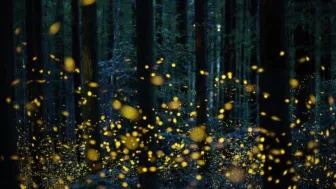
A dark forest at night filled with numerous glowing yellow and orange fireflies. The fireflies appear as bright streaks and dots of light, illuminating the lower part of the scene and scattered amongst tall, dark tree trunks and dense green undergrowth.
Environment

Are You Noticing It Too? Fireflies Are Fading From Our Summer Nights

For generations, fireflies have turned ordinary summer evenings into something magical. Their tiny flashes drift through backyards, fields, forests, and wetlands, creating a natural wonder cherished around the world. For many of us, they are woven into childhood memories, symbols of warm nights, healthy landscapes, and the simple joy of being outside after sunset.

But today, that familiar glow is under threat.

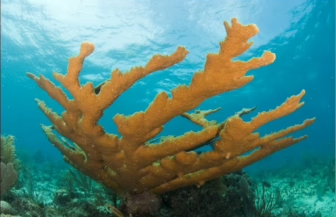
Large elkhorn coral rises from the seafloor in branching, antler-like shapes beneath clear blue water.
Environment

Florida’s Coral Reefs Need More Than Protection. They Need Commitment

Florida’s staghorn and elkhorn corals once helped build the living reefs that protect coastlines, support fisheries, shelter marine life, and define Florida’s ocean heritage. Their functional extinction is a heartbreaking warning about what happens when climate change, pollution, and underfunded conservation collide. But this moment must also be a call to action: with fully funded coral recovery programs, science-based protections, and renewed commitment to the Endangered Species Act, Florida’s reefs can still have a fighting chance.
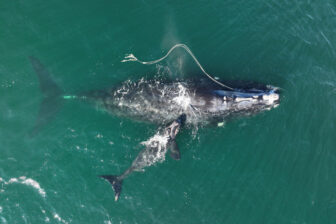
A large baleen whale, likely a fin whale, swims just below the surface of deep blue ocean water. Its streamlined body shows faint white markings near the head and distinct parallel pleats or grooves along its underside extending from the jaw to mid-body. A small dorsal fin and part of its tail flukes are visible, and the water appears slightly agitated around the whale.
Endangered Species Act

How Many Whales Does It Take To Save A Species? The Story Of The Rice’s Whale

How many whales does it take to save a species? For the Rice’s whale, the answer may be all of them. Found only in the Gulf of Mexico, this newly recognized species is already on the edge of extinction, with just 51 estimated to remain. By studying individual whales, scientists have uncovered critical insights about how Rice’s whales feed, rest, travel, and survive in one of the most industrialized marine environments in the world. Their stories are a reminder that science, not politics, must guide decisions about endangered wildlife, and that every protection matters when extinction is this close.
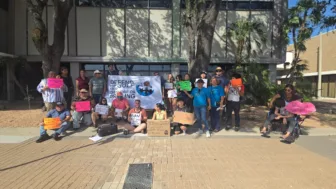
Alt text: A group of wildlife and climate activists stand on building steps holding colorful protest signs. A speaker speaks at a podium.
Endangered Species Act

Voices for the ESA: Shantha Ready Alonso on Nature, Justice, and Community

Shantha Ready Alonso joined our March 31 protest with a message rooted in justice, community, and the urgent need to protect nature alongside people. Her leadership reflects a vision of conservation that listens to frontline communities and recognizes that biodiversity loss is inseparable from human well-being.