Environment

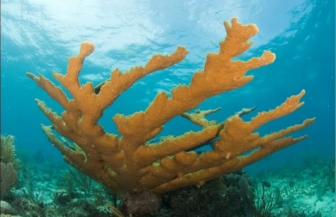
Large elkhorn coral rises from the seafloor in branching, antler-like shapes beneath clear blue water.
Environment

Florida’s Coral Reefs Need More Than Protection. They Need Commitment

Florida’s staghorn and elkhorn corals once helped build the living reefs that protect coastlines, support fisheries, shelter marine life, and define Florida’s ocean heritage. Their functional extinction is a heartbreaking warning about what happens when climate change, pollution, and underfunded conservation collide. But this moment must also be a call to action: with fully funded coral recovery programs, science-based protections, and renewed commitment to the Endangered Species Act, Florida’s reefs can still have a fighting chance.
Environment

How Many Whales Does It Take To Save A Species? The Story Of The Rice’s Whale

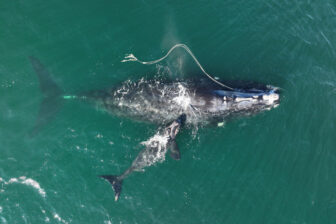
How many whales does it take to save a species? For the Rice’s whale, the answer may be all of them. Found only in the Gulf of Mexico, this newly recognized species is already on the edge of extinction, with just 51 estimated to remain. By studying individual whales, scientists have uncovered critical insights about how Rice’s whales feed, rest, travel, and survive in one of the most industrialized marine environments in the world. Their stories are a reminder that science, not politics, must guide decisions about endangered wildlife, and that every protection matters when extinction is this close.
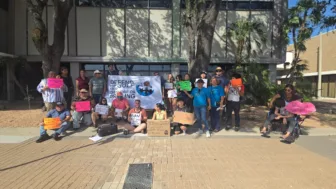
Alt text: A group of wildlife and climate activists stand on building steps holding colorful protest signs. A speaker speaks at a podium.
Endangered Species Act

Voices for the ESA: Karyn Bigelow on Nature-Grounded Communities and the Future

Karyn Bigelow brought a community-centered vision to our March 31 protest, connecting the fight for wildlife with the fight for healthy, thriving communities. Her message underscored that protecting endangered species is also about protecting the future we all share.
Alt text: A group of wildlife and climate activists stand on building steps holding colorful protest signs. A speaker speaks at a podium.
Environment

Voices for the ESA: Shantha Ready Alonso on Nature, Justice, and Community

Shantha Ready Alonso joined our March 31 protest with a message rooted in justice, community, and the urgent need to protect nature alongside people. Her leadership reflects a vision of conservation that listens to frontline communities and recognizes that biodiversity loss is inseparable from human well-being.

Alt text: A group of wildlife and climate activists stand on building steps behind a speaker at a microphone, holding colorful signs reading “Extinction Is Forever,” “We ♥ Wildlife,” and “Save the Endangered Species Act,” while a large banner in front says “Not Oil and Gas Sales.”
Environment

Voices for the ESA: Sara Gonzalez-Rothi on the Gulf and the Fight for Wildlife

At our March 31 protest, Sara Gonzalez-Rothi brought a powerful perspective shaped by public service, ocean policy, and a lifelong connection to the water. Her remarks reminded us that protecting wildlife is personal, and that the choices we make about ecosystems are also choices about our own future.
A narrow wooden boardwalk curves through dense, shadowy forest, surrounded by tangled roots and thick green foliage overhead.
Endangered Species Act

Southeast: Warm Waters, Wild Hearts, and What We Nearly Lost

As America approaches 250 years of independence, we are sharing regional wildlife stories about endangered and threatened species.

The Southeast is a region alive with motion. In the Everglades—one of America’s most unique and endangered habitats—slow-moving rivers of water wind through cypress swamps. Warm ocean waters sustain the rainforests of the sea, our coral reefs, while critically endangered pine forests provide roosts for threatened and endangered wildlife. Shaped by water, heat, hurricanes, and resilience, the Southeast is a landscape unlike any other.