The world’s most critically endangered whale is found only in the Gulf of Mexico, calling throughout the ocean waters between Texas and Florida. The Rice’s whale was described as a unique species by scientists in 2021, before that, due to limited data, they were considered a subspecies of the Bryde’s whale. After a thorough review by the nation’s top marine biology experts, these whales received protections under the Endangered Species Act in 2019. But now in 2026, we’re seeing those protections undone by political appointees in the Trump administration.
Of the estimated 51 Rice’s whales remaining, scientists have photographed 31 of them. Just about everything that researchers have learned about this unique species of whale in the Gulf of Mexico, they have learned from studying individual Rice’s whales. Like many other species of baleen whale, named for the strips of keratin that hang down from the sides of the roof of their mouth to catch food, Rice’s whales aren’t often observed in groups.
Scientists have learned a lot from these individual whales, about their unique behaviors and habitat, as well as about the threats and hazards they face living in one of the most industrialized marine areas in the world.
Here we’ll share the stories of individual whales so you can learn about what makes these whales special and power your advocacy for their protection and recovery.
Edna and Milky Way
Edna and Milky Way are two Rice’s whales that have taught us about how the species spends their time in the water column. By placing a suction cup tag that had an internal gyroscope in it, researchers were able to study where and when these whales were at the surface and when they were foraging for food. What they found is that these whales are spending just about the entirety of daylight hours feeding (see adjacent table). This indicates that this species is having to expend a lot of energy to make a living and are relying on a healthy source of food to be able to have that energetic cost pay off.
The other thing that data from Edna and Milky Way highlighted was that Rice’s whales spend most of the night at the surface of the water column. While this behavior alone isn’t an issue, the danger becomes clear when we pair it with the heavy shipping traffic that steams through the Gulf at all hours.
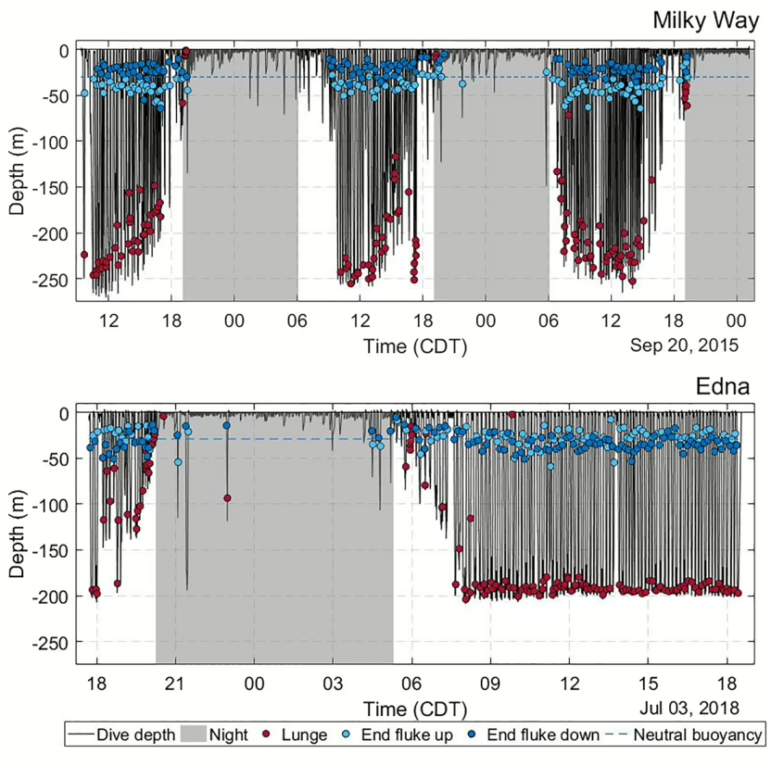
This table shows Milky Way and Edna’s height in the water column over time. The section that is dark gray indicates night time, and the unshaded sections are day time. Both Rice’s whales spend most of their daylight hours diving deep to forage while they spent their nights near the surface of the water. This table is from Kok’s 2023 paper “Kinematics and energetics of foraging behavior in Rice’s whales of the Gulf of Mexico.” doi:10.1038/s41598-023-35049-z
The Unnamed Whale from 1965
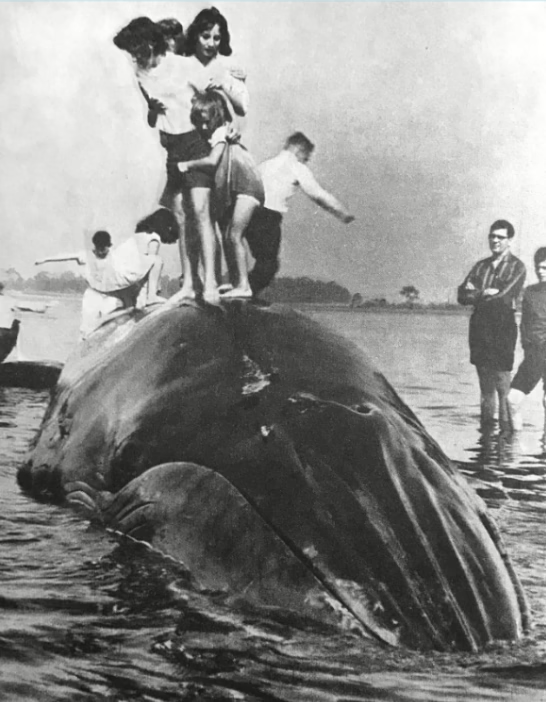
This photo is of the first Rice’s whale documented in scientific literature! This photo was taken in 1965, 7 years before the Endangered Species Act and Marine Mammal Protection Act and shows an interesting snapshot into human-whale interactions in Florida when touching whales was still legal. Photo published in Dale Rice’s 1965 paper “Bryde’s Whale in the Gulf of Mexico”
Meet the unnamed whale that started it all–our 1965 friend (adjacent image). This whale stranded in Panacea, FL in 1965 and led to the first scientific publication noting the presence of baleen whales in the Gulf of Mexico. While the Gulf is home to 20 species of toothed whales (from sperm whales to bottlenose dolphins), this was the first published documentation of a baleen whale.
Lucky
Lucky is the Rice’s whale that confirmed what Edna and Milky Way indicated: that Rice’s whales and vessels overlap and don’t mix well. Lucky (shown below) was seen in July 2019 alive and swimming…and showing clear signs of having been struck by a vessel. He’s called Lucky because not all whales are able to swim away after a collision with a vessel.
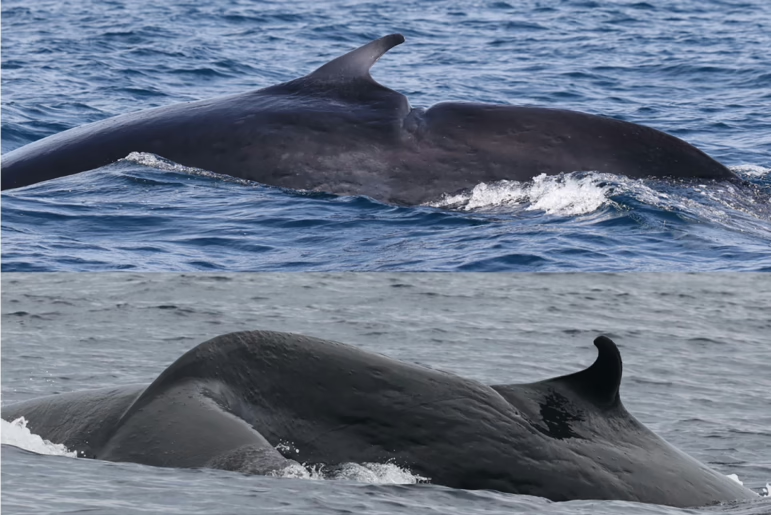
Photos of Lucky taken in 2019 showing a large scar between his dorsal fin and fluke showing where he had been struck by a vessel. This photo (and others!) can be found in Dias’s 2025 paper “Biological findings from a newly developed photo-identification catalog for the critically endangered Rice’s whale (Balaenoptera ricei)” and was taken under NOAA permit. doi:10.1371/journal.pone.0331010
Witchhazel
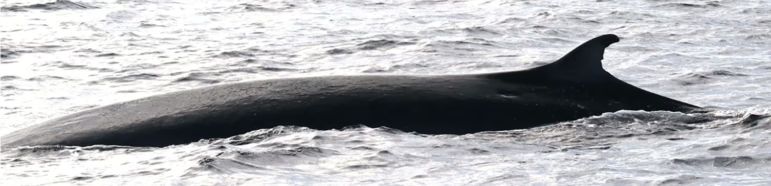
This photo is of Witchhazel in November 2018, swimming around throughout the Gulf of Mexico just two months before stranding in Florida. Note the two notches missing from the back edge of his dorsal fin–these unique notches are how researchers were able to recognize this individual as Witchhazel. This photo (and others!) can be found in Dias’s 2025 paper “Biological findings from a newly developed photo-identification catalog for the critically endangered Rice’s whale (Balaenoptera ricei)” and was taken under NOAA permit. doi:10.1371/journal.pone.
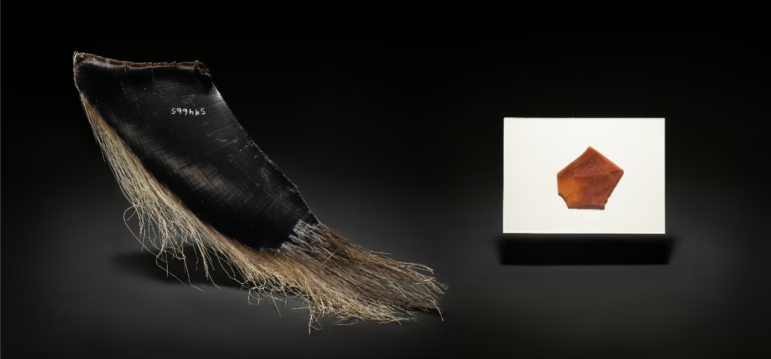
Photo of a plate of Witchhazel’s baleen and the small piece of plastic found inside his stomach. Smithsonian Museum of Natural History.
Witchhazel in some ways, was the first Rice’s whale. Not because he was the oldest Rice’s whale or because no Rice’s whale had existed before him. He was just the first whale to go from being thought to be a Bryde’s whale in the Gulf of Mexico to being understood to be a new unique species– the Rice’s whale. In fact, for years the scientists studying these baleen whales in the Gulf thought that they were a unique species. However, it wasn’t until Witchhazel stranded and scientists were able to study his skull were scientists able to confirm that, without a doubt, the bizarre Bryde’s whales in the Gulf of Mexico were actually a unique species: the Rice’s whale.
When Witchhazel stranded in the Florida Everglades in 2019, researchers from all over gathered to study everything about him. They were particularly interested in seeing what he had been feeding on; at this point, no one had any idea what these whales were eating–just that they were diving down deep like Edna and Milkyway to feed. However, when they performed the necropsy on him, his stomachs were empty…save for one 2.5” across thin piece of plastic. Adjacent image is a piece of Witchhazel’s baleen that he relied on to feed himself and the piece of plastic that likely contributed to his death.
Rice’s whales need a safe and healthy habitat to be able to survive and recover. Baby Rice’s whales have been seen with their mothers swimming around the Gulf (see photo of Scyther and her calf below), but unless the U.S. government restores their full Endangered Species Act protections, they are going to have a hard battle to survive.
One way you can take action for the Rice’s whale is by submitting a public comment defending their status as a federally listed endangered species before July 6, 2026.
You can also contact your elected officials to urge them to restore Endangered Species Act protections from the offshore drilling activities – right now, because of the March 31 “God Squad” decision, the entire oil and gas industry is allowed to operate without any care for Gulf endangered species.
We know the Endangered Species Act works to recover species, and the Rice’s whale deserves protection. Together we can stand up for this uniquely American whale and secure a future where they safely swim in their Gulf home.
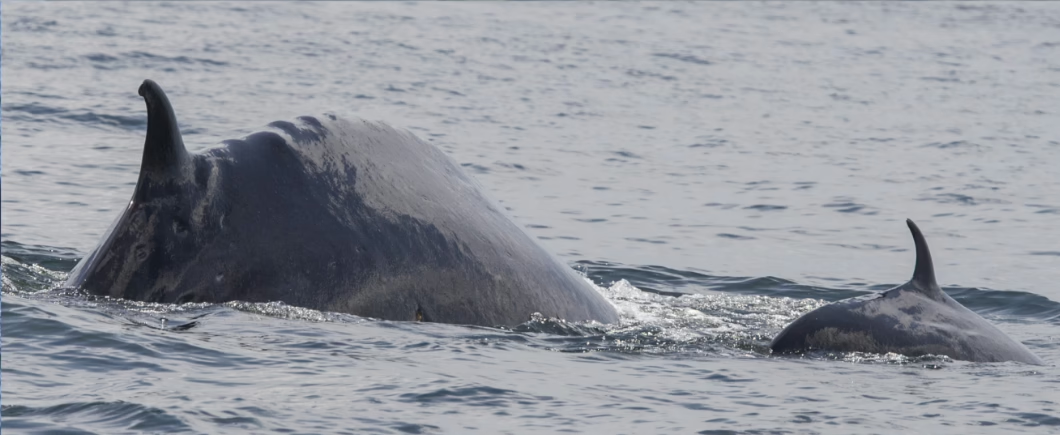
Photo of Scyther and her calf in 2011. This photo (and others!) can be found in Dias’s 2025 paper “Biological findings from a newly developed photo-identification catalog for the critically endangered Rice’s whale (Balaenoptera ricei)” and was taken by O.S.U. under NOAA permit. doi:10.1371/journal.pone.0331010