As someone who has spent years documenting, studying, and teaching about coral ecosystems across Florida’s coastlines, the news that staghorn and elkhorn corals are now considered “functionally extinct” is both heartbreaking and deeply personal.
Elkhorn coral received protection under the Endangered Species Act in 2006, making them a legal priority for conservation efforts, collectively leading to focused initiatives on a local and national level that helped them and the broader Florida Keys reef ecosystem by funding research and restoration projects. Even so, rising temperatures, ocean acidification, and ongoing degradation of sewage infrastructure and urban runoff pollution along Florida’s populated coastlines have created alarming environmental and human health scenarios much ignored by Florida’s state budget and leadership, resulting in rendering Elkhorn “functionally extinct.”
These aren’t just species lost to science; they’re living architects of our ocean, foundational to both ecological balance and human livelihood.
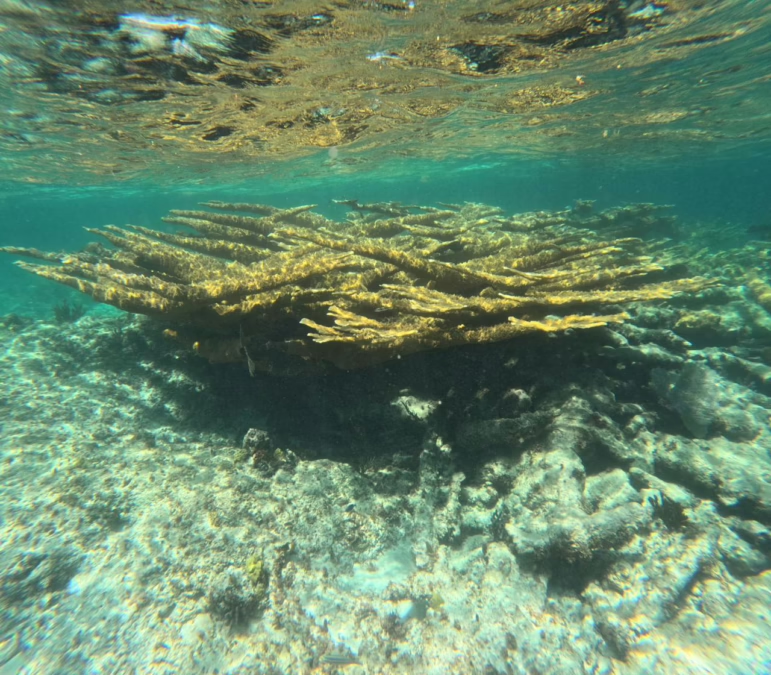
A healthy Elkhorn Coral colony, estimated to be a hundred years old.
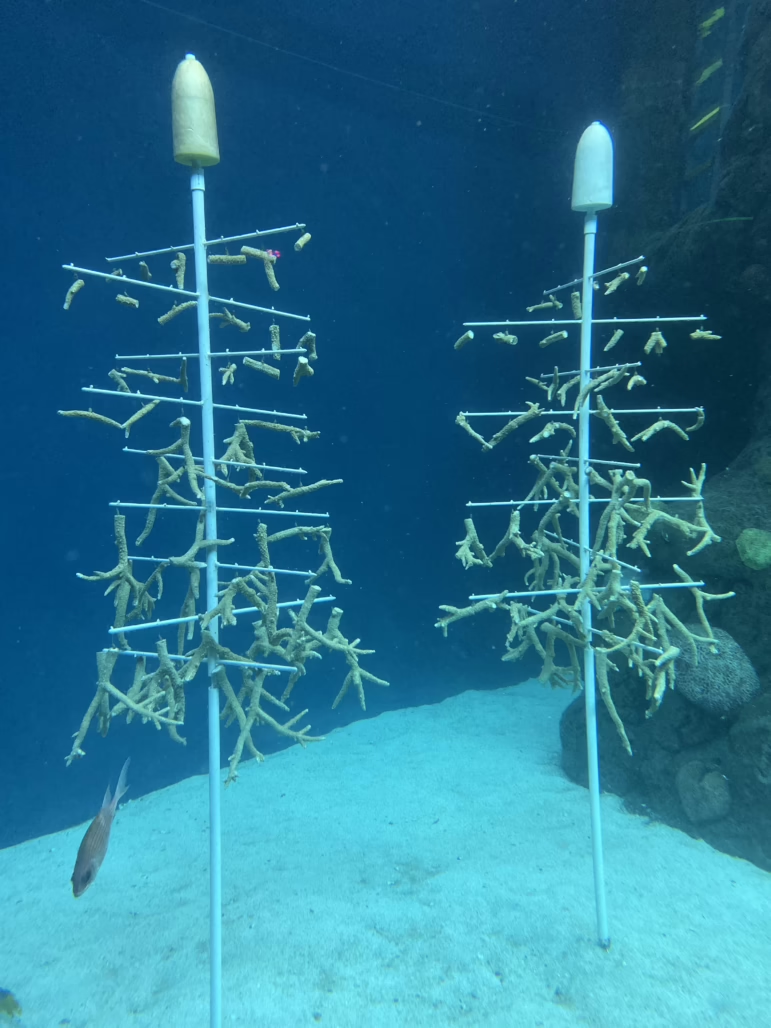
Coral trees in the Florida Keys grow suspended coral fragments in underwater nurseries to accelerate reef restoration.
When I first began working on coral health monitoring in 2019, I saw firsthand how fragile these ecosystems were under increasing stress from warming waters, disease, and pollution. But even then, there was still color and life; to hear that 97% to 100% of these once-abundant corals are now gone is a devastating milestone, not just for marine scientists, but for every Floridian who has ever snorkeled our reefs, fished our waters, or depended on coastal protection during hurricane season.
While the scale of loss is staggering, it cannot be the end of the story. This moment must serve as a catalyst. A wake-up call for immediate action, innovation, and collaboration. In my own coral research, I’ve seen how accessible technology like submersible drones can open doors for research, education, and even restoration in ways once unthinkable.
From mapping urban reefs thriving against the odds to engaging citizen scientists in coral health surveys, I’ve learned that hope doesn’t just come from the deep; it comes from us.
We now stand at a crossroads where our decisions, to reduce emissions, invest in marine restoration, and embrace technology-driven conservation, will determine not just whether we can save what’s left but whether we can rebuild what’s been lost. The success of any conservation action is contingent on adequate funding, collaboration between state, local and federal mandates and an understanding that underfunded or partially funded initiatives will not be as effective and successful as fully funded and supported actions.
The extinction of these species is not just a biological event; it’s a reflection of our collective choices. But it’s also an invitation to reimagine what ocean stewardship looks like in the 21st century.
The ocean has always been resilient, and so are we. If we can fully fund coral reef programs and recovery under the Endangered Species Act, while combining science, technology, and compassion, I believe we can still give Florida’s reefs and the communities that depend on them a fighting chance.