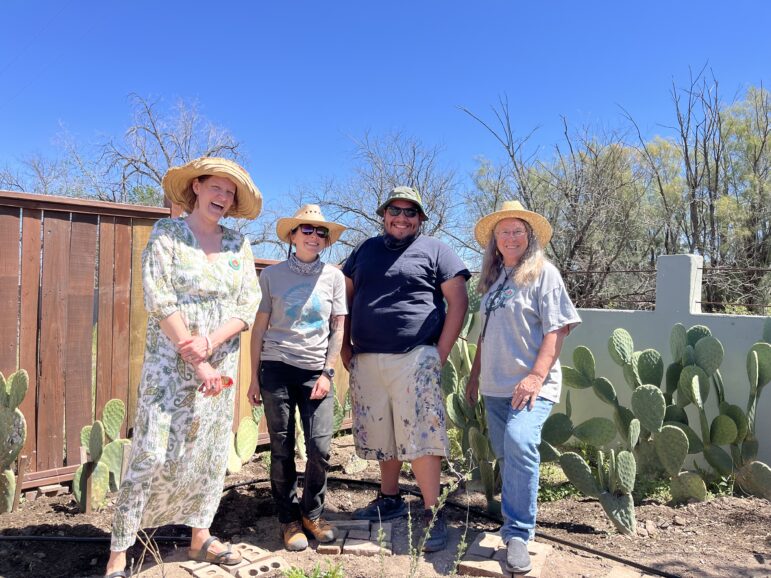
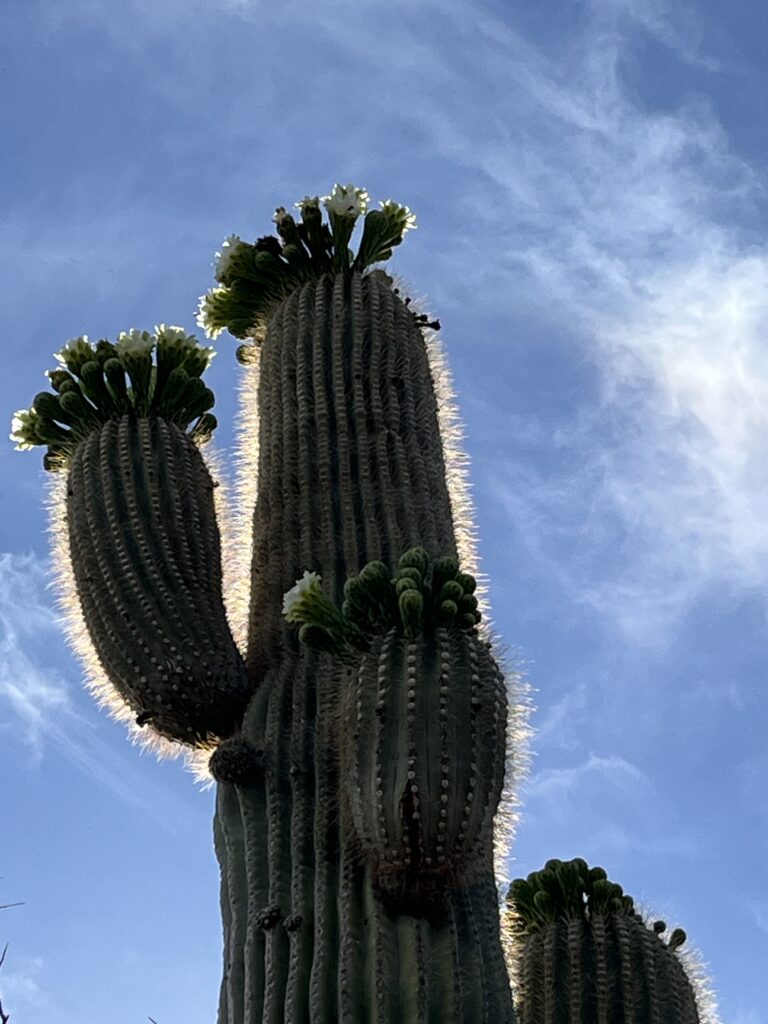
Saguaro cactus. Agave. Monarch butterflies. These are just a few of the iconic plant and animal species of the Sonoran Desert spotlighted at one of our recent community events for biodiversity conservation, in Arivaca, Arizona. On April 20th, we celebrated and raised awareness of imperiled species, through visual art, community outreach, native plantings, science lectures, and youth activities. In partnership with the Arivaca Pollinator Pathway Project, and with a generous donation of agaves from member organization Bat Conservation International, the Endangered Species Coalition installed agave and other native plants to create a night blooming garden for nighttime pollinator specialists, including pollinating bats and moths.
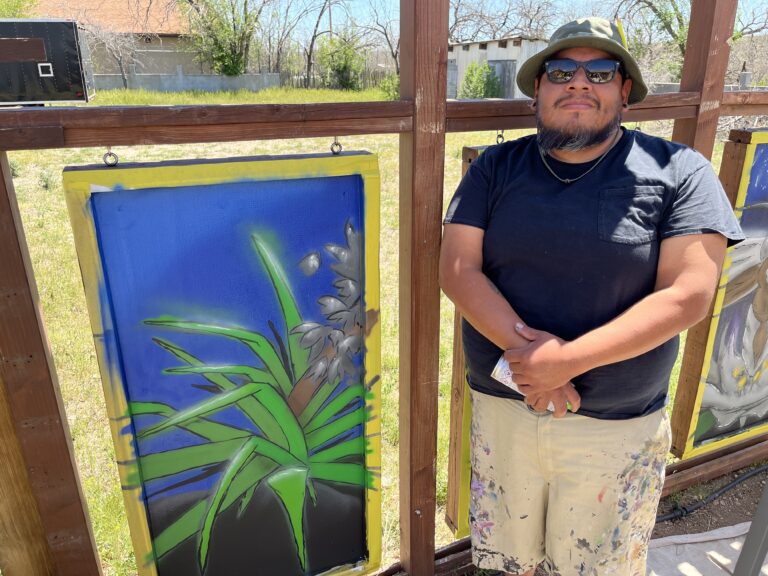
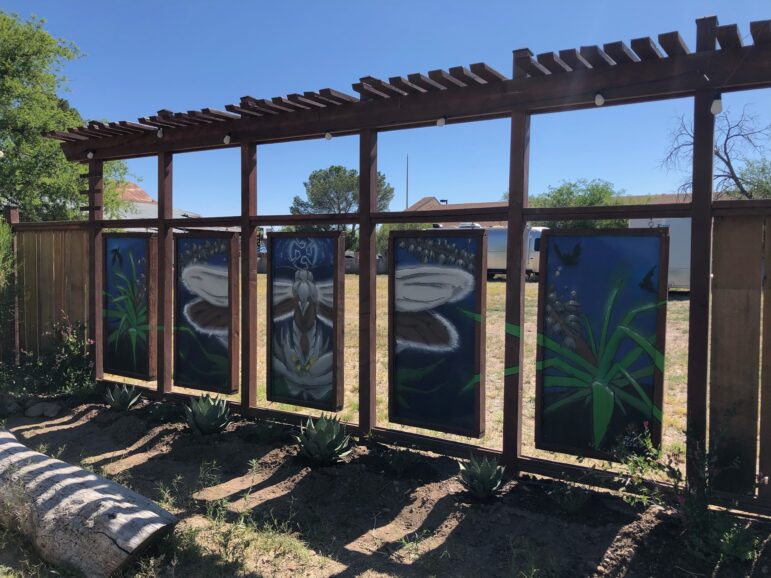
While community members installed the native plants, including the agave along with night blooming yucca, datura, and others, Tohono O’odham artist Paul ‘Nox’ Pablo painted a representative mural, illustrating the nighttime garden species and the plants on which they rely. The center panel of the mural features a whirlwind design, which has significance in the Tohono O’odham culture as a representation of the wind and is an important symbol of pollination and the element of air.
This is the second mural created in Arivaca by Paul, with the first being a wrap-around mural showing daytime and nighttime native plants and pollinators, created for the 50th Anniversary of the Endangered Species Act. These murals demonstrate cultural and community connections to natural systems, and the importance of biodiversity.
Similarly, the Arivaca Pollinator Pathway Project is having a transformative impact in the community, through the installation of eight public pollinator gardens, funded with support from Endangered Species Coalition’s Pollinator Protectors campaign. The newest facet of the Arivaca Pollinator Pathway Project is the registration of home gardens and free consultation for their owners, to increase the availability of plants for pollinators and increase community awareness of native species.
Emily Bishton, founder of Arivaca Pollinator Pathway Project explains, “The community’s whole-hearted embrace of this project, from tots to seniors, is what has given it so much life and growth over the past 15 months”.
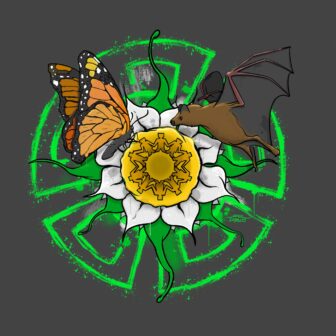
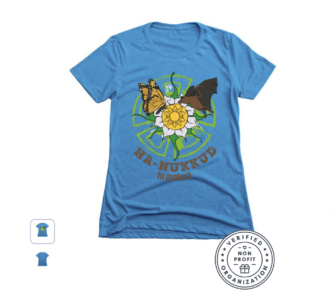
Endangered Species Coalition and our partners are working hard to create corridors for native plants and pollinators in Arivaca and across the US. You can be involved in funding the habitat creation work of ESC’s Pollinator Protectors by purchasing our newest Bonfire shirt, featuring artwork by Paul ‘Nox’ Pablo. In the southwestern United States, some of our most important pollinators migrate across international borders, including the imperiled monarch butterflies and the lesser long-nosed bat, a bat species whose population recovered, thanks to Endangered Species Act protection.
The shirt design features species with special meanings for the Tohono O’odham, including animals and plants featuring prominently in legends and winter storytelling traditions. Tohono O’odham consider saguaro cacti to be tribal members, and the saguaro fruit is an important traditional source of food and also used in traditional ceremonies. indicating the Tohono O’odham new year.