
By Angela Liang, Ph.D.& Jewel Tomasula, Ph.D.
A polar bear depending on sea ice near Alaska’s shore, a manatee relying on healthy seagrass in Florida, a golden eagle crossing an open landscape in California, and a community turning on its lights may seem to belong to different policy conversations. The fact is: They do not. Energy policy influences climate, land, water, and infrastructure, all of which can affect wildlife and habitats.
For wildlife advocates in the United States, understanding energy policy is important. Energy policy could affect whether ocean waters become too warm for corals to survive and how much pollution enters the air and water.
Because energy is essential to modern life, policymakers are constantly evaluating how it is produced, transported, and used. Understanding how the energy system works can help us evaluate policy proposals, identify what part of the energy system is being changed, and understand impacts on species and their habitats.

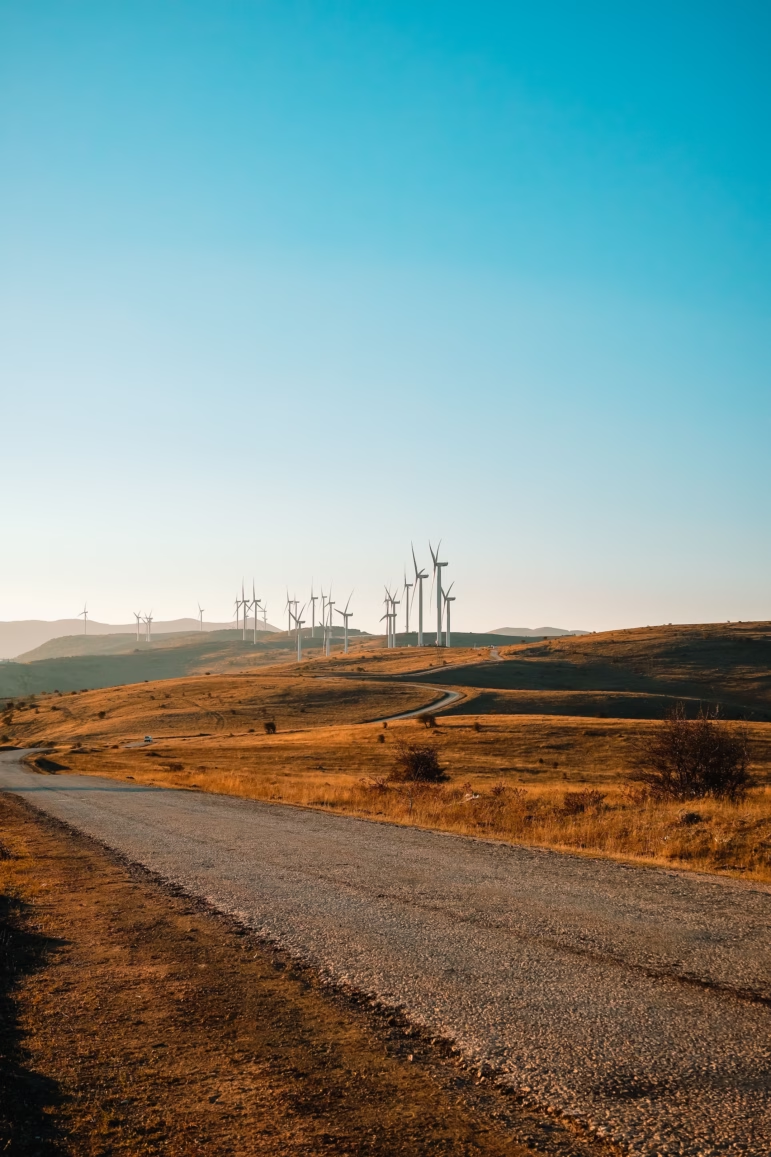

Where energy comes from, and how electricity moves energy in three steps within our energy system
A central question in energy policy is the source of our energy. As global temperatures rise and many regions experience the effects of a changing climate, replacing traditional sources, i.e., fossil fuels, with cleaner sources such as solar and wind, is an important first step toward a lower-emission future.
Electricity is another focus of energy policy. Electricity is an energy carrier: it moves energy from where it is produced to where it is used, and it is one of the main ways to convert different energy sources into power that everyone and every business can use. Once generated, electricity is delivered to people through a network known as the electric grid.
At its simplest, the electricity system has three functions:
(1) Generation produces electricity at facilities such as power plants, hydropower dams, wind farms and solar installations;
(2) Transmission moves large amounts of electricity over long distances, both within states or across states, on high-voltage power lines; and
(3) Distribution carries electricity through local power lines to end users such as homes and businesses.
These functions are connected, but they are not always owned or operated by the same entity.
Once electricity reaches homes and businesses, it powers many appliances that a home or business needs, such as microwaves, cellphones, and light bulbs. Some items, however, such as cars and stoves, may still run on fossil fuels directly instead of electricity. Electrification, meaning switching from appliances and equipment that burn fossil fuel directly to electric alternatives, could lower overall emissions and provide an option for using clean energy as the energy source.
**What is an electric grid? An electric grid is like the road system for electricity. A grid is an interconnected system that moves electricity from where it is generated to where it is used.
Who runs the electricity system? Overview of the U.S. energy market
Electricity markets in states are divided into regulated or deregulated markets (see Figure 1). While there is variation across states and regions, the U.S. Environmental Protection Agency (EPA) makes these general distinctions when describing U.S. electricity-market structures.
In a regulated market, electric utilities are typically responsible for generating, transmitting, and distributing electricity to their customers. In other words, one utility may own or control much of the infrastructure needed to move electricity from facilities (e.g., power plants) to end users (e.g., homes), including transmission lines, transmission facilities, substations, distribution lines, and electric meters at people’s houses. State governments, mostly through their public utility commissions, oversee certain important utility decisions such as ensuring reliable and reasonable electricity rates.
In a deregulated market, electricity generation decisions are separate from the electric utilities that deliver electricity to customers. Generations are managed by entities called Independent System Operators (ISOs) and Regional Transmission Organizations (RTOs), which sell electricity through competitive wholesale markets. Figure 2 shows the RTOs and ISOs in the United States. These were established by the federal government (FERC Order No. 888 and No. 2000) in the late 1990s. It is estimated that about two-thirds of U.S. electricity consumers live in regions where transmission is managed by an ISO or RTO.
ISOs and RTOs make a lot of decisions: they coordinate electricity generation, movement of the electricity through high-voltage and long-distance transmission lines, i.e. operate portions of the transmission system, and manage wholesale markets in which electricity suppliers compete to provide electricity. Put simply, these markets determine wholesale electricity prices.
What impact do these differences in regulated and deregulated markets make? In a deregulated market, there is an increased availability of renewable sources and green pricing programs as compared to a regulated market. But the regulated market is catching up with options such as renewable energy certificates (RECs).
For wildlife advocates, the key takeaway is this: who makes an energy decision depends on what part of the electricity system is involved and where the project is located. Understanding whether a proposal involves a utility, an RTO or ISO, a state regulator, or federal government can help advocates identify where decisions are being made and where wildlife concerns may enter the process.
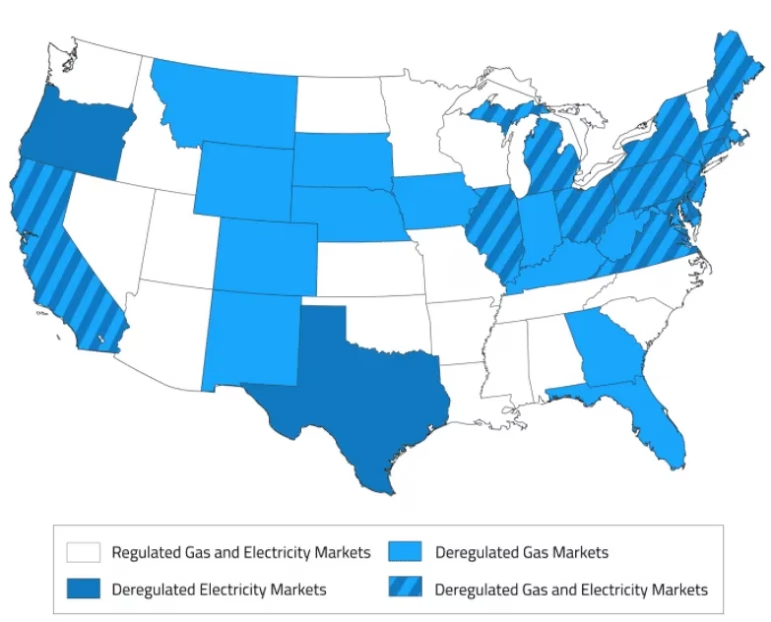
Figure 1. Regulated versus deregulated electricity market in each state. Figure adapted from Regulated vs. Deregulated Electricity Markets.
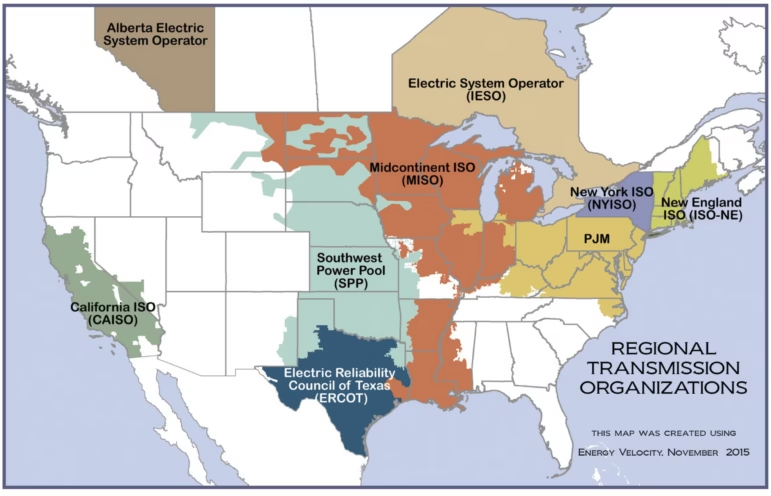
Figure 2. Distribution of domestic independent system operators (ISOs) and regional transmission organizations (RTOs). Around two-thirds of U.S. electricity consumers live in a region managed by an ISO or RTO. Picture adapted from Power Market Structure | US EPA.
Why understanding demand, supply, transmission, and interconnection matter
The electric grid must continuously balance supply and demand. After years of relatively flat electricity use in the United States, data centers and artificial intelligence (AI) boom are among the main drivers to an increased demand for electricity. Reliability and affordability of electricity, however, depend on more than simply just increasing supply through building more power plants, solar installations or other facilities. The system also needs adequate transmission and a workable process for connecting new energy resources and delivering them to the end users.
Electricity transmission constraints occur when the grid cannot move as much electricity as needed. New transmission lines can help move power and support reliability, but transmission lines also have physical footprints that can affect habitat, waterways, wildlife corridors, air quality, and landscapes.
Interconnection to the electric grid is also a factor to energy reliability and affordability. Before a proposed energy generation project connects to the transmission system, electric grid operators study its impacts and determine what upgrades to the electric grid may be necessary. Projects waiting for those studies form an “interconnection queue.” A project can face both processes (i.e., transmission constraints and slow interconnection queue), and addressing one does not necessarily resolve the other.
Supply, demand, electricity transmission constraints, and interconnection all contribute to issues surrounding energy reliability and affordability. Right now, demand is outpacing supply. But transmission constraints and interconnection queue backlogs also majorly contribute to current problems with rising energy costs and slow transition away from fossil fuels.
We’ll put these concepts together in an example: PJM, the RTO that serves over 65 million of people and spans over 13 states and Washinton D.C., was ordered by the federal government in 2022 to reform its interconnection queue process – that is to say, modernizing the interconnection queue management has been a concern for many years. Before PJM’s reform, it took 8 years for projects to wait in the PJM interconnection queue until approved and over 80% of them in the queue are clean energy.
This slow process to approve new energy projects from RTOs and ISOs has been concerning for efforts to provide more energy supply in general to match with the current energy consumption patterns and transition away from fossil fuels. In 2024, PJM’s energy auction price for 2025/2026 is 900% higher than the previous auction. The auction price is not the same as the price on people’s energy bills, but this wholesale cost feeds into higher electricity supply rates and, in turn, higher energy bills for homes and businesses.
Clean energy vs renewable energy
Energy labels can hide important differences.
Renewable energy generally includes naturally replenished resources such as wind and solar. The sources of renewable energy, such as sunlight or wind, are infinite compared to the time scale of human civilization. For instance, the sun is estimated to use out its hydrogen and become unstable after 5 billion years (10^9 order of magnitude) as compared to the end of last Ice Age 11,700 years ago and the development of human civilization around 5,500 years ago (10^4 order of magnitude).
Clean energy, on the other hand, may be defined more broadly as zero or low-carbon emission energy. For example, nuclear power (including nuclear fusion and fission), is not renewable energy by definition but some people call it clean energy. Another example is hydrogen. Hydrogen could be used as an energy carrier to generate power and electricity. Whether hydrogen is considered clean or not, depends on how it’s made, managed, and used, i.e., does the process involve natural gas, wind, or solar. The U.S. and European Union define “clean hydrogen” as producing at least 70% less lifecycle greenhouse gas emissions than fossil-fuel-based hydrogen. Hence, when determining whether a resource is clean energy or not, understanding and calculating the emission throughout the whole lifecycle matters.
Every energy resource has some combination of land, water, infrastructure, climate, or wildlife impacts. For wildlife advocates considering energy policy proposals, it matters to consider whether a resource is renewable, clean or fossil fuel. It also matters what will be built, where it will be located, what supporting infrastructure it requires, which species or habitats could be affected, and what environmental safeguards apply.
Asking smart questions about energy policy
When an energy proposal appears, here are questions to ask:
- What energy problem is the proposal trying to solve: reliability, affordability, transmission, interconnection, permitting, or something else?
- Which part of the energy system, energy market or electricity system does the proposal change?
- Would the proposed change directly address the energy or electricity problem its supporters claim, or is it indirect or not connected at all?
- Who gains or loses decision-making authority?
- Does it change the Endangered Species Act (ESA), Clean Water Act (CWA), National Environmental Policy Act (NEPA), or another environmental safeguards?
- What could the resulting infrastructure mean for vulnerable species, habitat, water, or air quality?
For example, if the energy problem claimed by supporters is inadequate transmission, ask whether the bill changes planning, siting, cost allocation, or construction. If the problem is delayed new generation, ask whether the actual constraint is interconnection, permitting, transmission availability, or financing. Finally, if environmental protections are changed, ask for evidence that those changes address the identified energy bottleneck and examine the conservation consequences.
Putting it together: S. 5653 as an example
- 5653, or Bipartisan American Affordability and Jobs Act of 2026 (BAAJA), illustrates why asking the above questions matter. The bill combines transmission provisions with rollbacks to bedrock environmental laws supported by most Americans.
In general, S. 5653 speeds up permitting for interstate transmission lines. It takes modest steps on long-term planning, setting a timeline for transmission facilities to develop interregional plans and directing the Department of Energy to study transmission. Neither idea is new, however, since regional coordination and federal transmission research already exist. The bill also leaves the interconnection queue backlog, a major driver of the gap between energy supply and demand, largely unaddressed, apart from encouraging AI and automation in queue management. Better queue management would also require updating models to reflect changing environmental conditions (e.g., extreme weather) and new technologies, which the bill does not do. Finally, permitting and interconnection are separate processes: projects can enter the interconnection queue before they obtain a permit.
Overall, the bill offers a partial, long-term fix for some of the drivers of rising energy costs. Because many people struggle to pay their energy bills now, we are concerned that it does little to lower costs in the short term. Its effect on cutting emissions and advancing clean energy is also uncertain. Even an analysis that supports the bill projects only a $50 to $78 reduction in annual household electricity bills by 2040, or a few dollars per month after 14 years. And while some analyses say the bill may reduce emissions, they give little weight to how its changes could lock in current fossil fuel use or allow new fossil fuel development.
Reform is clearly needed to address the energy challenges we face today, such as affordability and reliability. But it is equally important to weigh the pros and cons from all perspectives. To learn more about concerns and questions about S. 5653 from our coalition partners in environmental and wildlife conservation, we recommend starting here:
From ESC:
- Endangered Species Coalition Statement on Senate Advancement of the Bipartisan American Affordability and Jobs Act
- What does Permitting Reform have to do with Endangered Species Recovery?
- What’s Hidden in the Senate Permitting Bill? Three Provisions That Would Weaken the Endangered Species Act
From our partners:
- Bill Analysis – The Wilderness Society
- Bill Analysis – Save the Manatee Club
- Bill Analysis – Earthjustice
- Bill Analysis – Natural Resources Defense Council
- Bill Analysis – Center for Energy & Environmental Analysis
Closing – the takeaway
As demonstrated by the S. 5653 example, energy and animal conservation are not separate policy worlds. Decisions about how electricity is produced and moved can shape landscapes and ecosystems for decades. Wildlife advocates do not need to become experts on every energy market rule, but understanding the basics of how the electricity system works and who makes decisions provides a practical framework for evaluating future energy proposals and policy debates.