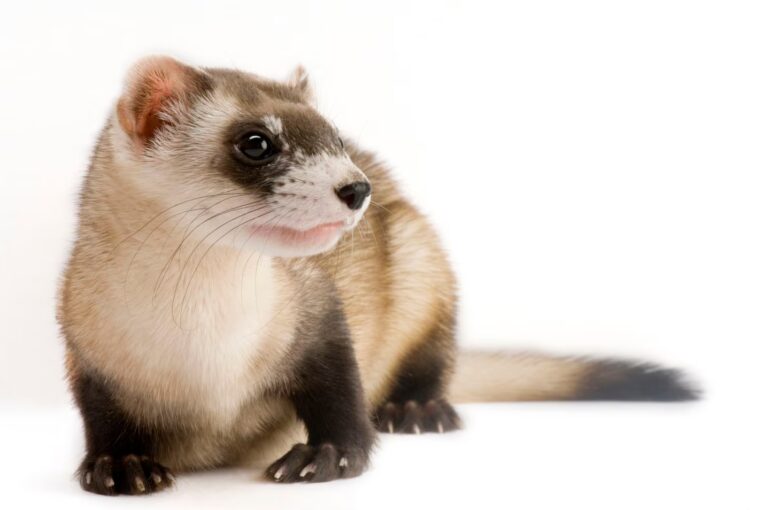
Black-footed ferrets are considered one of the most endangered species in the United States, with just under 500 left in the wild. Black-footed ferrets live primarily in grasslands and weigh up to about 2.5 pounds, or about 1.12 kg, with a carnivorous diet, preying mostly on prairie dogs and other small mammals. While the endangered status of black-footed ferrets has long been discussed and brought to the attention of the public, it seems that there are not enough people listening.
Conservation attempts have long been in the works, but they keep getting shut down or put in jeopardy by proposed ESA rollbacks, government shutdowns and lack of funding for necessary wildlife protections. For example, the government shutdown in October 2025 put the recovery of black-footed ferrets in critical danger by preventing government-funded release of captive-bred ferrets into the wild. The release of black-footed ferrets is highly sensitive to timing, which has to be perfect for the highest rate of survival. With the shutdown, that window was slammed shut.
The black-footed ferret has a long, fraught history with the Endangered Species Act. The species was first placed on the U.S. Endangered Species List in 1967, and by 1979, it was thought to be entirely extinct. That changed in 1981, when a ranch dog in Meeteetse, Wyoming, brought a dead ferret to its owner’s doorstep, a surprising discovery that revealed a small surviving population. Between 1985 and 1987, conservationists rescued the last wild black-footed ferrets from Meeteetse so they could be bred in captivity to rebuild their numbers. It was one of the most dramatic last-minute rescues in American conservation history.
Decades of careful work followed. Since 1992, breeding centers have produced over 9,000 offspring, with 250 to 350 breeding adults kept in captivity and more than 4,300 reintroduced to 30 locations across the Midwest. The U.S. Fish and Wildlife Service even pursued cloning as a tool to introduce much-needed genetic diversity into the population. The recovery program’s long-term goal is to reach a wild population of 3,000 ferrets, at which point the species could be downlisted from endangered to threatened, eventually joining the bald eagle and American alligator as a success story of the Endangered Species Act. That milestone, however, remains far off.
Progress has repeatedly been disrupted by forces outside conservationists’ control. In early 2025, the national recovery coordinator for black-footed ferrets, Tina Jackson, was fired as part of the Trump administration’s federal workforce cuts. Jackson had spent nearly 30 years working on ferret conservation before taking the role, and she had been responsible for coordinating the species’ recovery across 12 states. Her dismissal left the recovery program without its central leader at a critical moment. With only about 500 ferrets remaining in the wild, the conservation community grew deeply fearful about the species’ survival in the face of mass federal employee firings and frozen funding.
The stakes of losing federal support cannot be overstated. When prairie dog colonies, which are essential to sustaining black-footed ferrets, are not actively conserved, ferret populations can experience a dramatic, near-instantaneous collapse, a phenomenon conservationists describe as “blinking out.” Sylvatic plague, a non-native disease that spreads rapidly through flea transmission, poses a constant threat to prairie dog colonies and, by extension, to the ferrets that depend on them for food and shelter. Combating the plague requires consistent, ongoing human intervention, precisely the kind of work that loses ground when funding disappears.
Despite these obstacles, conservation work has continued wherever possible. In March 2026, the Arizona Game and Fish Department released 19 black-footed ferrets across three sites in northern Arizona, with biologists timing the spring release to coincide with prairie dogs emerging from their burrows and the beginning of ferret breeding season. Researchers have also turned to new technology to improve post-release survival rates. The Smithsonian’s National Zoo partnered with Swansea University to develop specialized tracking devices capable of mapping the three-dimensional underground movements of ferrets inside prairie dog burrows, a breakthrough that may help scientists better understand why reintroduced ferrets often fail to thrive after release.
The story of the black-footed ferret is ultimately a story about what it takes to pull a species back from the edge of extinction, and how quickly that progress can unravel. As one wildlife biologist put it, the ferret population is still not at a number where the species could survive if human support were stepped away from for even a few years. Whether the black-footed ferret gets its second chance depends on whether the people and institutions responsible for protecting it can weather the political storms standing in the way.
Kaitlyn Lemanek is an intern for the Endangered Species Coalition and a high school junior in the Washington, DC area. She is passionate about animals and the unique role each species plays in its environment. Kaitlyn hopes to study wildlife biology or marine biology in college. In her free time, she enjoys baking, identifying animals on trail cameras, and spending time in nature.