
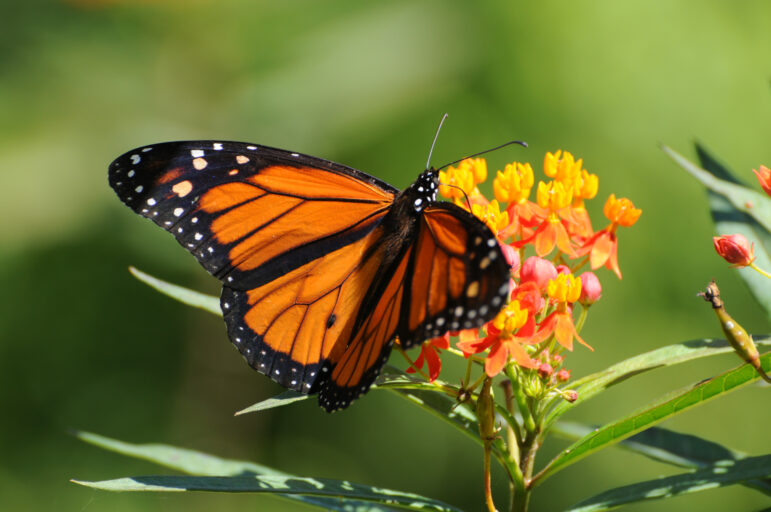
Protecting Monarch Butterflies: Habitat and Federal Policy
Monarch butterflies are among North America’s most recognizable species, known for migrations that can span thousands of miles. Throughout their journey, they depend on a healthy habitat.
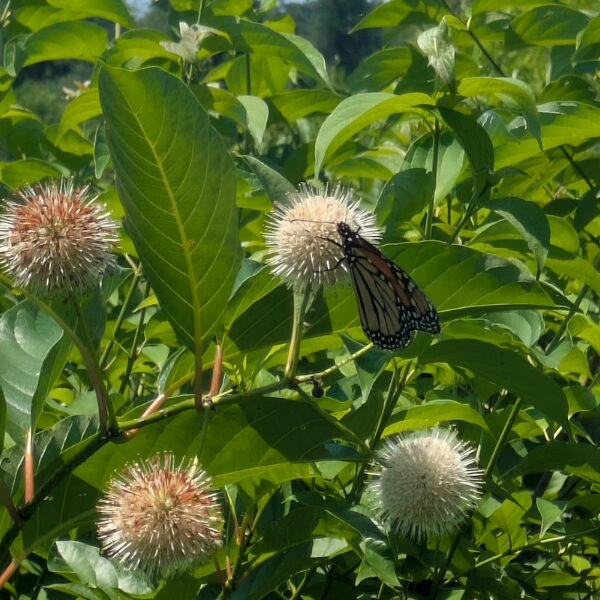
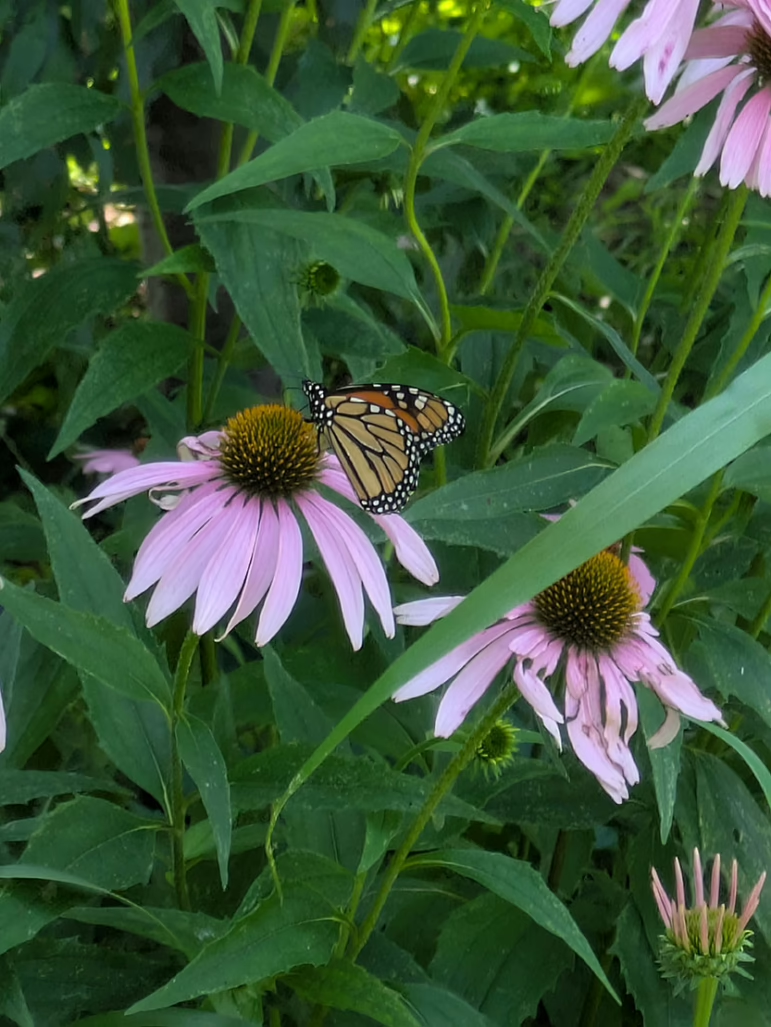
Milkweed is very key to monarch reproduction. Female monarchs lay their eggs on milkweed and monarch caterpillars feed only on milkweed. Adult monarchs rely on nectar-producing flowers for food as they breed and migrate.
The U.S. Fish and Wildlife Service explains that some of the major threats to monarch butterflies are their breeding and migratory habitat being lost, as well as their exposure to insecticides and the effects of climate change. Monarchs contribute to ecosystems as pollinators and are part of broader food webs and provide food for birds and other wildlife.
MILKWEED AND HABITAT RESTORATION
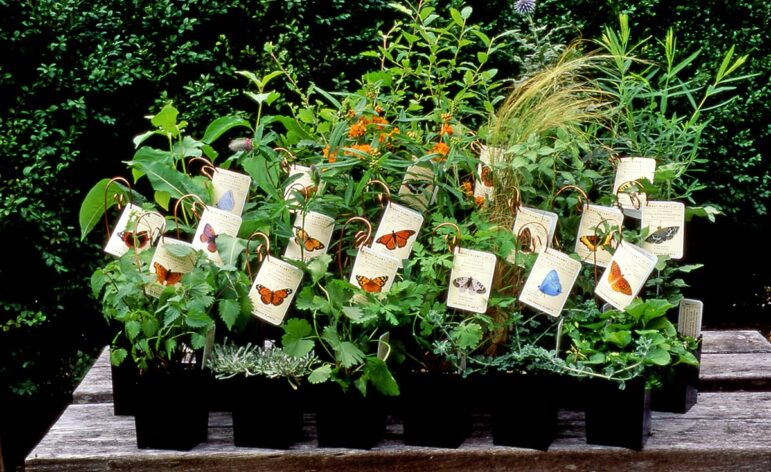
Restoring native milkweed and nectar plants is one of the most direct ways to create habitat for monarch butterflies.
Individuals, conservation organizations, schools, landowners, and communities have worked to put monarch habitat back on the landscape. Monarch Watch’s Monarch Waystation Program recognizes gardens and other sites that provide resources monarchs need, registering 58,524 Monarch Waystation habitats as of September 8, 2026.
The scale of these efforts is impressive, as is the scale of the habitat that is needed.
In January 2025, Monarch Watch reported that it had distributed about 100,000 free milkweed plants in 2024 and almost 50,000 Monarch Waystation. The organization reported that more monarch habitat was being lost each year than the amount that was being restored even with all of these efforts. Monarch Watch estimated that conservation efforts would need to grow to 50,000 new Monarch Waystations every year and one million or more milkweed plants annually to keep pace with the ongoing habitat loss.
Peer-reviewed research also demonstrates the magnitude of the habitat challenge. A U.S. Geological Survey-led study examining eastern monarch recovery estimated that more than 1.3 billion additional milkweed stems would be needed across the Midwestern United States to reach the population goal examined in the study. Most of the successful restoration scenarios required substantial participation in multiple land-use sectors.
The scale of monarch decline has led to efforts to secure federal protection under the Endangered Species Act.

In December 2020, the U.S. Fish and Wildlife Service determined that listing the monarch butterfly under the Endangered Species Act was warranted but precluded by higher-priority listing actions. The finding meant that the Service concluded that the monarch met the criteria for listing but did not move forward with a proposed rule at that time. Instead, the monarch became a candidate for listing.
Four years later, in December 2024, the Service proposed listing the monarch butterfly as a threatened species under the Endangered Species Act.
The proposal also had in it a species-specific rule under section 4(d) of the Act and approximately 4,395 acres of proposed critical habitat at western monarch overwintering sites in seven California counties. The Service stated that finalizing the rule as proposed would add the monarch to the federal List of Endangered and Threatened Wildlife and extend Endangered Species Act protections to the species.
The initial public comment period was later reopened in March, 2025 and then closed on May 19, 2025.
The U.S. Fish and Wildlife Service has not issued a final rule.
The 2026 federal Unified Agenda lists the monarch rulemaking as a Long-Term Action and the next action is listed as “To Be Determined.” The U.S. Fish and Wildlife Service also currently states that there has not yet been a final ruling.
As a result, the monarch butterfly is not currently federally protected under the Endangered Species Act.
WHAT MONARCH RECOVERY REQUIRES
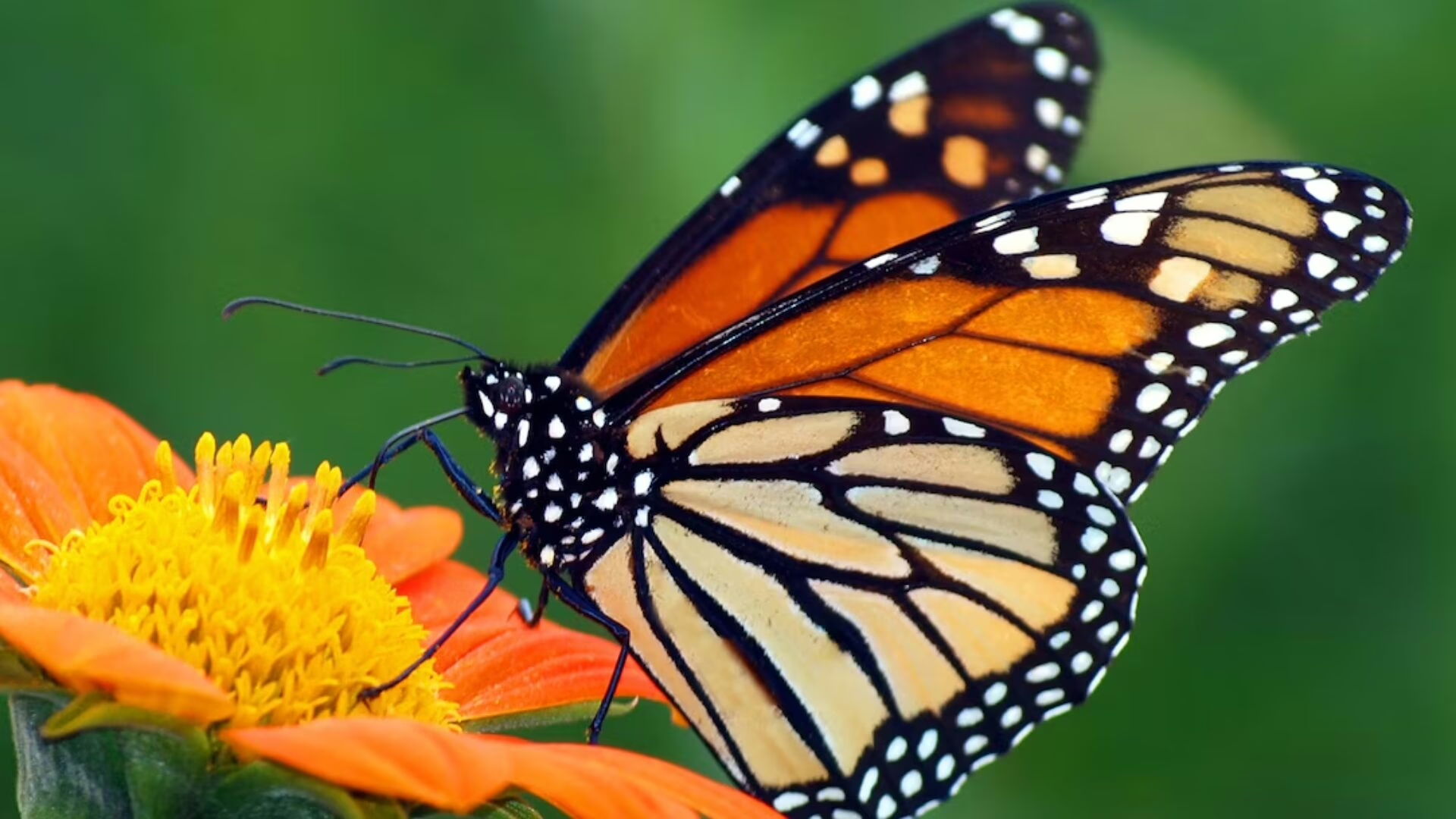
In its 2024 proposed rule, the U.S. Fish and Wildlife Service acknowledged four broad conservation needs for making migratory monarch populations stable and able to grow more:
- Significantly increasing the availability of milkweed and nectar plants in breeding and migratory areas
- Protecting and enhancing overwintering habitat
- Avoiding and minimizing impacts from insecticides and herbicides
- Maintaining public support for monarch conservation
Research and conservation programs show that meeting these needs will require work in many different landscapes and communities.
THE ENDANGERED SPECIES COALITION’S WORK
The Endangered Species Coalition works on both habitat conservation and policies affecting imperiled species.
Through Pollinator Protectors, ESC works with partners in 26 states to create habitat for native pollinators by supporting plantings of locally appropriate native species. These plantings include milkweed which is the host plant monarch caterpillars depend on, as well as other native plants that provide habitat and food for pollinators.
ESC has also publicly supported Endangered Species Act protection for monarch butterflies as the federal listing process has moved forward.
Protecting monarchs requires conservation over their whole range from restoring native habitat to reducing threats and protecting important breeding, migratory, and overwintering areas, as well as continuing to follow the federal listing process.

Individuals and communities can contribute to monarch conservation by planting native milkweed and nectar plants appropriate to their region and creating habitat in yards, schools, community spaces, farms, and other landscapes near them.
Learn more about Pollinator Protectors
Learn more about native milkweed from guest writer, Heather Norwood.
Stay informed about monarch conservation and Endangered Species Act decisions, join our Activist Network